

The Magic of Modular Furniture for Small Urban Homes
Furniture that Adapts to You
When outfitting a luxury micro-apartment, traditional, bulky furniture is your biggest enemy. To truly embrace compact urban living, your furniture needs to work just as hard as you do. This is where the magic of modular and multifunctional furniture comes in.
What Makes Furniture “Modular”?
Modular furniture consists of standardized units or sections that can be configured in multiple ways. It offers the ultimate flexibility, allowing you to adapt your living space based on your immediate needs—whether you’re hosting a dinner party, working from home, or going to sleep.
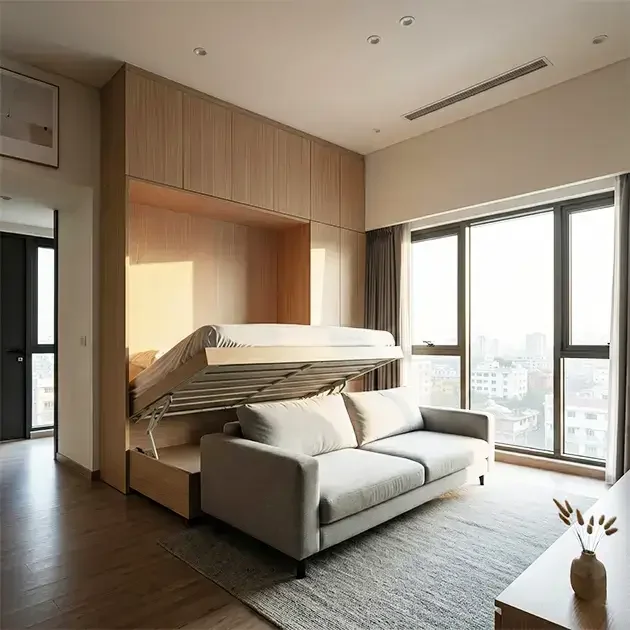
Essential Space-Saving Pieces for Your Home
The Modern Murphy Bed: These aren’t the clunky pull-downs of the past. Today’s Murphy beds often feature integrated sofas or fold-out desks when closed, seamlessly blending into luxury decor.
Nesting Tables: A set of nesting tables can be tucked away to save space and pulled out when you have guests over and need extra surfaces for drinks and snacks.
Storage Ottomans: Every piece of furniture should offer hidden storage. Ottomans serve as coffee tables, extra seating, and a place to hide away blankets, books, or electronics.
Expandable Dining Tables: Opt for a sleek console table that can extend into a full dining table capable of seating six when the occasion calls for it.
Where Aesthetics Meet Utility
You don’t have to pick between “pretty” and “practical.” Clean lines, good materials, and thoughtful detailing make multipurpose pieces read like deliberate design choices, not compromises. Pay attention to mechanisms (soft-close, gas lifts, solid slides) — they’re the difference between something that feels cheap and something you actually enjoy using.
Materials, details, and the illusion of space
A multifunctional piece succeeds when its mechanics are invisible. Warm, consistent materials—carefully chosen veneers, matte metal trims, tactile textiles—make a folded or hidden element read as intentional design. Good detailing hides seams, aligns reveals, and maintains a calm palette so that motion becomes the apartment’s choreography rather than its nervous tick.
How it changes inhabitation
Designed systems reshape behaviour. Mornings begin at a compact desk with integrated task lighting; afternoons become lounge time with clear sightlines and unobstructed flow; evenings host a small dinner around an expanded table. The apartment stops dictating activity; it enables it. That is the difference between shrinking to fit a space and designing the space to fit a life.
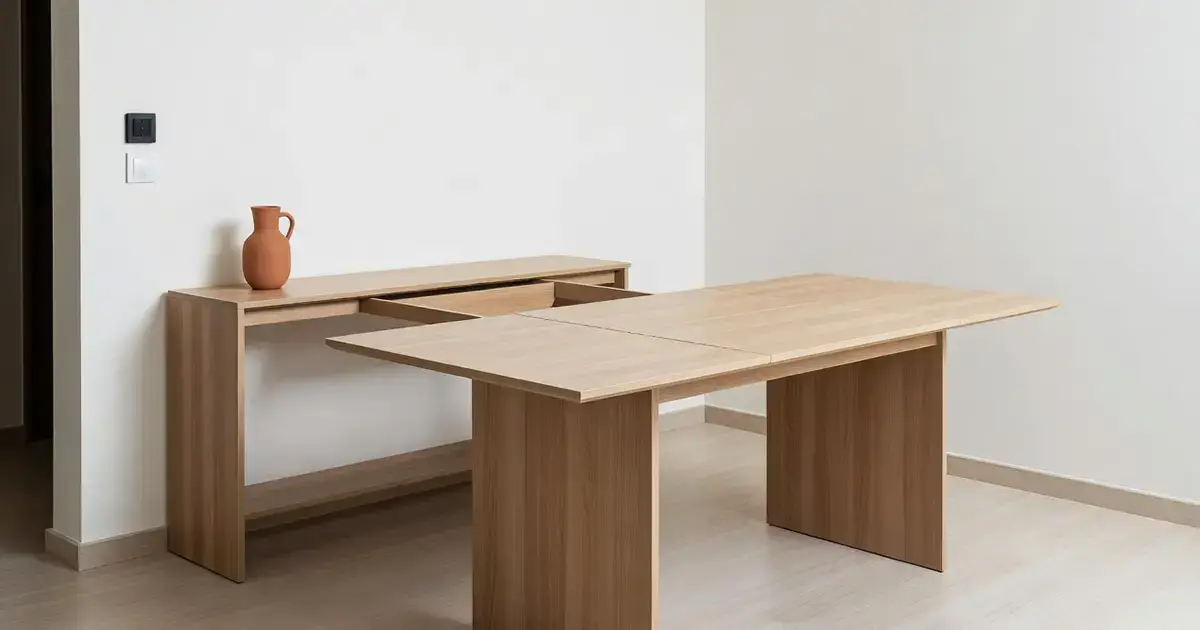
Practical prescription for architects
Specify modular systems early in the brief. Coordinate joinery tolerances, allow service access, and select hardware rated for daily cycles. Match finishes across movable and fixed elements so transformation reads as a single gesture. The result is not an economized interior but an intentional, composed one.
Design the system, not just the objects. When furniture is specified as architecture, a micro-apartment becomes calm, capable, and unmistakably refined.
- Interior
- February 26, 2026